


Losing your hair often feels like losing a part of your identity. When you finally decide to do something about it, you are hit with a wall of confusing acronyms: FUT, FUE, DHI, Bio-FUE.
At Cosmo Radiance Hyderabad, we believe an educated patient is a happy patient. You shouldn't have to be a doctor to understand how we restore your hair.
Today, we are comparing the two most advanced techniques we offer: FUE (Follicular Unit Extraction) and DHI (Direct Hair Implantation). Which one is right for you?
1. FUE (Follicular Unit Extraction): The Trusted Standard
FUE is the modern standard that replaced the old "strip method" (FUT), leaving no long linear scar at the back of your head.
How it works (The 3-Step Process):
1. Extraction: Individual hair follicles (grafts) are taken from the back of your head (donor area).
2. Canal Opening: The surgeon uses a micro-blade (or Sapphire blade) to make tiny slits or holes in the bald area.
3. Implantation: The grafts are placed into these holes manually with forceps.
Best For:
· Mega Sessions: Patients needing high coverage (3,000+ grafts) for large bald patches.
· Cost-Effectiveness: Generally more affordable than DHI while still offering excellent results.
2. DHI (Direct Hair Implantation): The "No-Touch" Technique
DHI is often marketed as the next evolution of FUE. The key difference is the tool used: the Choi Implanter Pen.
How it works (The 2-step process):
1. Extraction: Grafts are harvested just like in FUE.
2. Implantation: There is no separate step for making holes. The graft is loaded into the hollow needle of the Choi Pen. The surgeon clicks the pen, which inserts the hair and creates the channel simultaneously.
Best For:
· Maximum Density: The pen allows us to plant hairs very close together.
· Unshaven Transplants: Because no slits are made beforehand, we can sometimes perform the procedure without shaving the entire head (great for women or executives).
· Faster Healing: Less trauma to the scalp means slightly faster recovery.
The Million Dollar Question: Which Gives Better Density?
Here is the truth: The technique matters less than the surgeon.
While DHI technically allows for slightly higher density because the pen is so fine, a skilled FUE surgeon at Cosmo Radiance can achieve incredibly dense packing using Sapphire blades.
The "Cosmo Radiance" Difference: Artistry
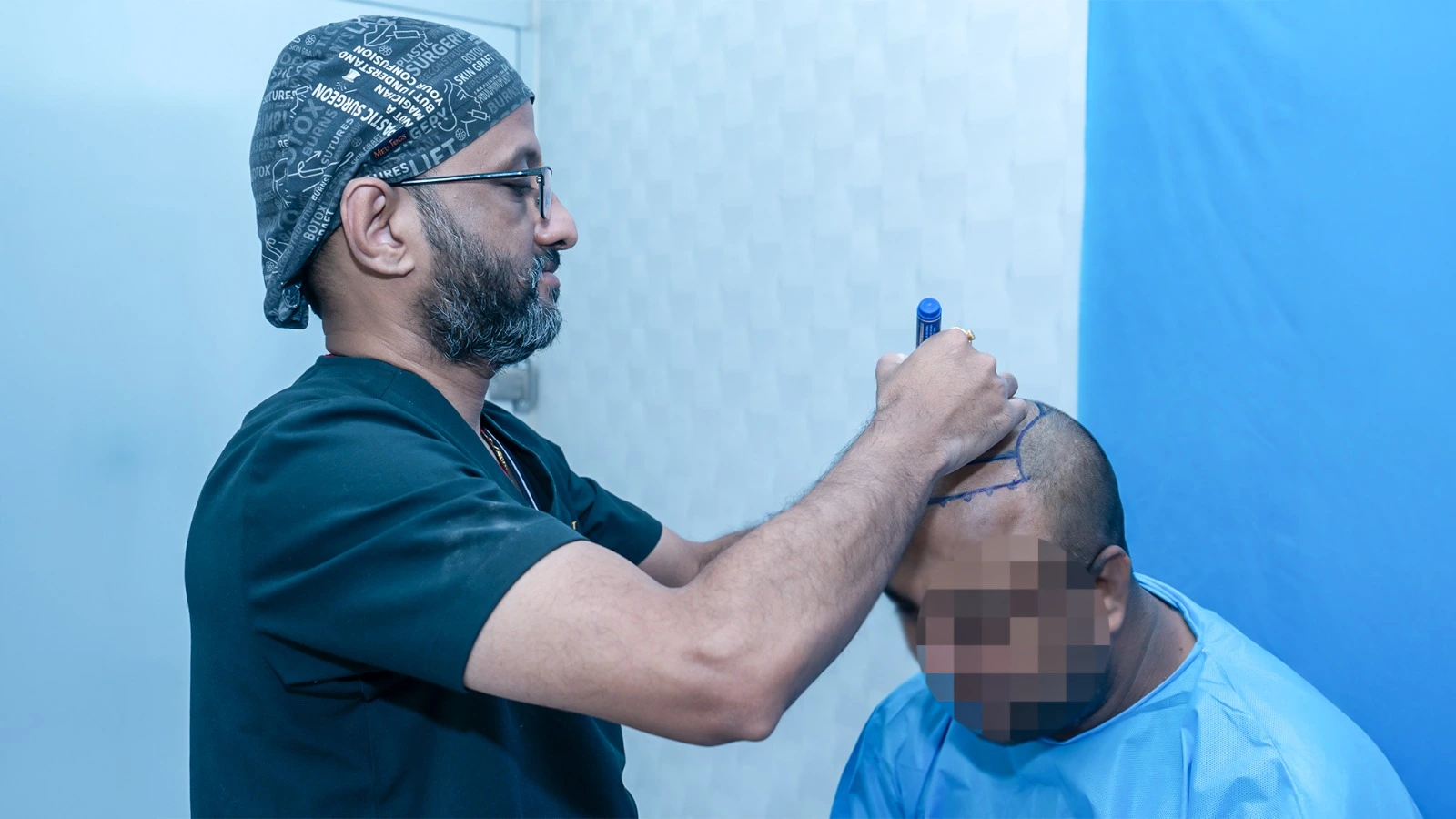
Density is useless if the hair looks fake. The secret to a great transplant isn't just "more hair"—it is Hairline Design.
· We use single follicles for the front hairline (for a soft, natural look).
· We use double/triple follicles behind the hairline (for volume).
· We adhere to the "Rule of Thirds" to ensure your new forehead suits your face shape.
PRP: The Secret Weapon for Both
Whether you choose FUE or DHI, we often combine the surgery with PRP (Platelet-Rich Plasma) Therapy. This acts like "fertilizer" for your newly planted grafts, increasing their survival rate and speeding up growth.
Conclusion: Which Should You Choose?
· If you have extensive baldness (Grade 5-7) and need maximum coverage on a budget, FUE is likely your best choice.
· If you just need to lower your hairline, fill the temples, or want the absolute highest density possible regardless of cost, DHI is the winner.
The best way to decide? Let us examine your donor area. Book a consultation at Cosmo Radiance to see which method fits your scalp and your goals.
Frequently Asked Questions (FAQs)
Q1: Will the transplanted hair fall out?
A: The transplanted hair comes from the "safe zone" (back of the head), which is genetically resistant to balding. Once these roots take hold, they are permanent for life. However, you may experience "shock loss" (shedding) in the first 3 months—this is normal, and they grow back stronger.
Q2: Is the surgery painful?
A: We use local anesthesia. You will feel a small prick at the beginning, but after that, the scalp is numb. Most patients watch movies or nap during the procedure.
Q3: What is the cost of a hair transplant in Hyderabad?
A: Costs are calculated "per graft." Since every patient needs a different number of grafts (some need 1,500, others need 4,000), we can only give an accurate quote after seeing your scalp.