

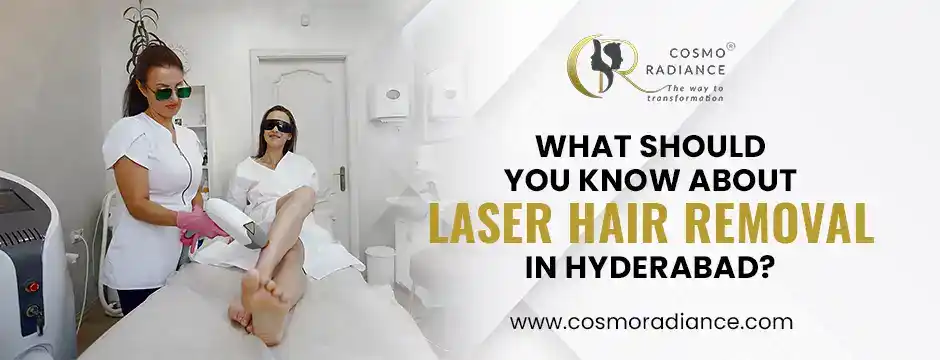
Unwanted hair can be more than a cosmetic concern. Frequent shaving, waxing, and threading can take time and may leave behind razor bumps, ingrown hairs, irritation, or uneven-looking skin. This is why laser hair removal in Hyderabad has become an increasingly considered option for people seeking longer-lasting hair reduction.
The treatment works by delivering controlled laser energy to hair follicles. The goal is to reduce the follicle's ability to produce visible hair over successive treatment cycles. However, results are not simply determined by the laser device. Skin tone, hair thickness, treatment area, hormonal factors, and treatment settings all influence the outcome.
Furthermore, Indian skin often contains more epidermal melanin. Therefore, appropriate wavelength selection and carefully controlled energy levels are particularly important. A proper consultation helps determine whether the treatment is suitable and how the procedure should be approached.
How Does Laser Hair Reduction Work?Laser hair reduction is based on selective photothermolysis. The laser targets pigment within the hair structure and converts light energy into heat. This thermal effect reaches the follicle while the surrounding skin is protected through appropriate treatment parameters and cooling.
Hair does not grow uniformly at one time. Follicles move through different growth phases, and laser treatment is most effective when targeted hairs are in an appropriate active growth phase. Consequently, a series of sessions is normally required rather than one isolated appointment.
After treatment, the affected hairs gradually shed. New growth may appear finer, lighter, and less dense as subsequent sessions address additional follicles.
Why Skin Type MattersFitzpatrick skin typing provides a useful clinical framework for assessing how skin may respond to laser energy. Fairer skin and darker hair can respond differently from darker skin with highly pigmented epidermis.
For Indian skin, particularly Fitzpatrick Types IV and V, treatment planning requires greater attention to epidermal melanin. Type VI skin may require an even more cautious approach, with deeper-penetrating wavelengths often considered to reduce unwanted absorption by surface pigment.
Therefore, choosing a provider based only on advertised equipment can be misleading. Clinical assessment and customised dosimetry are equally important.
Which Areas Can Be Treated?One advantage of modern laser hair reduction is its versatility. Treatment can be planned for small, localised areas or larger body regions depending on individual needs.
Common areas include:
Upper lip and chin
Jawline and neck
Underarms
Arms and legs
Chest and back
Bikini and Brazilian areas
Male beard and facial contours
Other selected intimate areas
Small facial areas may require relatively little treatment time. Larger zones naturally require more time and planning. Intimate treatments also require particular attention to hygiene, privacy, cooling, and patient comfort.
For men, the objective may differ from complete hair removal. Beard shaping, chest grooming, or reducing dense back hair can involve carefully defined treatment boundaries.
Is Laser Treatment Suitable for Fine or Hormonal Hair?Fine facial hair can be more challenging than thick terminal hair. Hair characteristics affect how effectively laser energy can interact with the follicle.
Hormonal conditions can also influence regrowth. For example, women experiencing PCOS-related hirsutism may have persistent terminal facial hair because hormonal stimulation continues to affect follicular activity. Laser treatment may help reduce the visible hair burden, but underlying hormonal factors still matter.
This is where a medical assessment becomes valuable. The clinician can distinguish ordinary cosmetic hair growth from patterns that may warrant broader evaluation.
At Cosmo Radiance, the stated CHPP approach combines different laser modes for different hair characteristics. The page describes Alma Soprano SHR and diode-based treatment for thicker hair, alongside Fotona Nd: YAG technology for finer, resistant facial hair.
What Makes a Treatment Clinically Different?When comparing the best laser hair removal clinic in Hyderabad, it is useful to look beyond machines and promotional claims. A clinically responsible service should consider consultation, skin typing, treatment parameters, cooling, hygiene, protective eyewear, and follow-up.
Technology Is Only One PartDifferent wavelengths interact with skin and hair differently. The 755nm Alexandrite wavelength, 810nm Diode wavelength, and 1064nm Nd: YAG wavelength each have different penetration and absorption characteristics.
A multi-wavelength platform can therefore provide flexibility. However, more technology does not automatically mean better treatment. The device must be appropriate for the individual, and its settings must be selected professionally.
Medical Supervision MattersA medically supervised setting provides another layer of safety. Before treatment, the clinician can consider skin type, hair calibre, previous reactions, tanning, medications, and relevant medical history.
The treatment page also describes dermatologist-defined dosimetry and protective eyewear. These details matter because laser treatment involves energy delivery to living tissue and should not be approached like a routine salon service.
What Can You Expect During Treatment?The experience generally begins with a consultation and skin assessment. The treatment area is then prepared, with shaving commonly preferred rather than waxing or epilation because the follicle needs to remain available for laser targeting.
A cooling medium may be applied before the handpiece passes over the area. Patients can experience warmth, snapping, or mild discomfort depending on the body part, hair density, and individual sensitivity.
Immediately afterwards, temporary redness or small areas of perifollicular swelling can occur. These reactions generally settle relatively quickly, although individual responses differ.
The treated hair does not disappear instantly. Instead, damaged hairs gradually shed over the following days and weeks. This distinction is important because visible hair shortly after treatment does not necessarily mean the procedure has failed.
What Aftercare Supports Better Skin Recovery?Post-treatment care is relatively straightforward but should not be ignored. The treated skin can be temporarily more sensitive, so excessive heat and unnecessary irritation should be avoided.
Sun protection is particularly important. Broad-spectrum SPF can help reduce the risk of unwanted pigmentation after treatment. Patients should also follow the clinic's instructions regarding hot showers, steam rooms, strenuous exercise, and active skincare ingredients.
Retinoids, glycolic acid, strong exfoliants, or other irritating products may need to be paused around treatment depending on the treated area and clinician's advice.
Between sessions, shaving can generally be used when needed. Waxing and epilation are different because they remove the hair from the follicle and can interfere with the intended treatment cycle.
What Results Can You Realistically Expect?Laser treatment should be understood as long-term hair reduction rather than an instant or universal guarantee of permanent hair removal.
For those researching the best laser hair removal in Hyderabad, it is important to understand that hair density can decrease substantially over a treatment course, while remaining growth may become finer and less noticeable.
Results vary between individuals. Coarse, pigmented hair may respond differently from fine hair. Hormonal influences can also affect maintenance requirements.
This is why a realistic consultation is more useful than a fixed promise. The clinician can assess the hair and skin characteristics and explain what level of improvement may reasonably be expected.
Combining Precision, Privacy and Care in Laser Hair RemovalAt Cosmo Radiance, laser hair removal in Hyderabad is positioned around its Cosmo-Hybrid Precision Protocol, dermatologist-led assessment, and treatment planning for different skin and hair characteristics. The clinic describes private laser suites, cooling technology, aseptic protocols, and access to hospital-grade infrastructure.
The setting is particularly relevant for patients who want additional privacy during intimate-area treatment. Dedicated hygiene facilities and gender-specific clinical technicians are also described as part of the treatment experience.
For patients with darker Indian skin tones, the emphasis on skin typing and wavelength selection may be especially relevant. However, suitability still needs to be determined individually rather than assumed from skin type alone.
If you are considering treatment, begin with a professional assessment rather than choosing solely on promotional offers. Book a consultation to discuss your skin, hair type, treatment area, and expected results.
End NoteLaser hair reduction can offer a practical alternative to repetitive shaving, waxing, and threading when laser hair removal in Hyderabad is appropriately planned. Its effectiveness depends on more than the device itself.
Skin type, hair characteristics, growth cycles, treatment settings, cooling, clinical supervision, and aftercare all contribute to the overall experience. Consequently, patients should evaluate both technology and medical standards before choosing a provider.
A personalised consultation remains the best starting point. It allows treatment expectations to be discussed honestly and helps determine the most suitable approach for the individual.
Hair Graft & Surgical Candidacy Evaluator
Calculate estimated follicular unit requirements and evaluate your suitability based on validated Norwood-Hamilton clinical parameters.
Current Selection: Norwood 3: Deep Frontal Recession — Frontal recession creating pronounced M-shape pattern; requires hairline redesign.
Age helps assess stability of native donor hair and future miniaturization velocity.
Determines whether medical stabilization is recommended prior to surgery.
Safe extraction limits depend on donor follicular unit density and hair caliber.
Favorable Surgical Candidacy
Stable hair loss pattern with healthy donor density. FUE or DHI sapphire direct implantation is suitable for dense, natural restoration.
Want an exact hairline design and donor microscopic assessment?
Get an in-person clinical consultation and trichoscopy analysis with Dr. Prem Sunder & trichology team.
*Medical Disclaimer: Follicular unit calculations and candidacy indicators are educational projections based on standardized clinical averages. Individual scalp elasticity, hair caliber, and miniaturization dynamics require formal microscopic trichoscopy and physician evaluation. In compliance with National Medical Commission (NMC) regulations, results may vary by individual physiological response.
Fitzpatrick Skin Phototype & Laser Safety Evaluator
Worried about laser burns or post-inflammatory hyperpigmentation (PIH)? Determine your skin phototype and discover how our advanced 1064nm Nd:YAG and photoacoustic lasers protect South Indian skin tones.
Type IV: Moderate Olive / Golden Brown
Fotona StarWalker MaQX / Long-Pulse Nd:YAG (1064nm)
Long-Pulse 1064nm Deep Selective Photothermolysis
Ready for a custom laser test-patch & digital dermoscopy?
Consult directly with Dr. Prem Sunder & our clinical laser dermatologists at Jubilee Hills / Madhapur.
*Medical & Clinical Disclaimer: Fitzpatrick phototype categorizations and laser wavelength recommendations are educational assessments based on standardized dermatological photobiology. Every patient requires in-person medical evaluation, dermoscopic skin analysis, and a mandatory localized test-patch prior to full treatment. In strict accordance with National Medical Commission (NMC) ethical directives, therapeutic outcomes vary based on individual biological and cellular healing response.
Laser Hair Reduction
Explore detailed procedure insights, before/after results, surgeon credentials, and pricing at Cosmo Radiance.
Have questions about this procedure?
Speak directly with our senior surgeons and medical team at Cosmo Radiance Hyderabad for confidential clinical guidance.